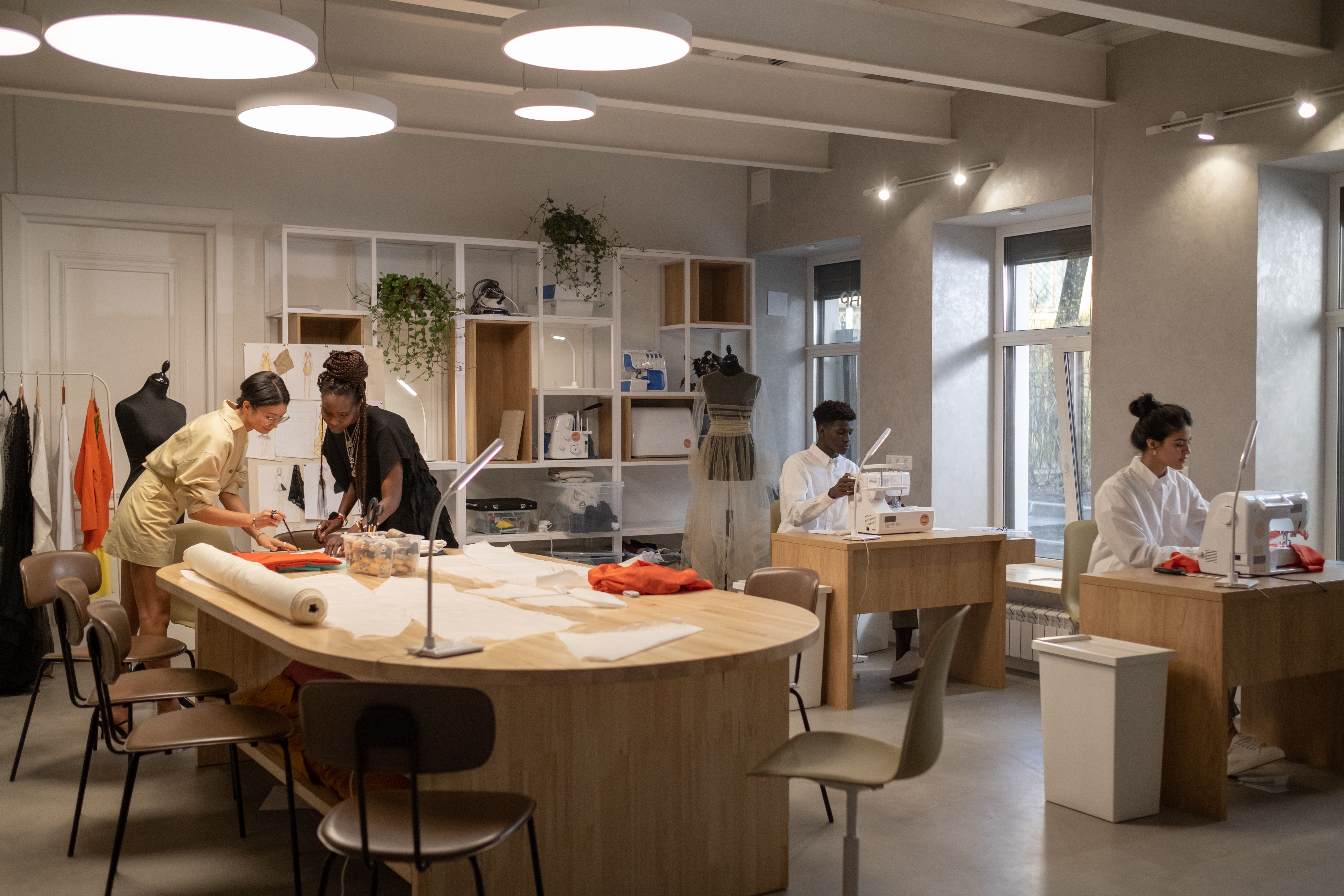
Making in Britain is having a moment
Maybe you already have a startup brand, or maybe you have just been thinking about starting one. Either way, you do not want to commit to hundreds and hundreds of pieces. You want to stay in control of your product as it takes shape, and to feel genuinely confident in it before it ever reaches a customer. And perhaps making in Britain has crossed your mind, but you have assumed the prices will be sky-high, or there is simply something about it you are not yet sure of.
Let me take you on a journey, because I think you will come away from it not just confident, but excited to make in Britain.
The next wave is small, skilled and properly made
Here is something you might not know. Around 40% of UK textile manufacturers are now looking at bringing production back from Asia, and the best British makers are booked up six months in advance. The figures all point the same way: the next wave is not high-volume reshoring. It is small, skilled and properly made, and that is exactly why it is booming.
And it is happening alongside something bigger. As consumers, we are reading our labels, asking how a thing was made and who made it, and choosing to pay a little more for less rather than buying mountains of what we do not need. Given the waste that overproduction and overconsumption have done to the world, that is not simply a nice idea. It is the way forward. Making things in Britain is having a moment, and the Made in Britain label, once a nice-to-have, has started to mean something to customers again.
Reshoring is not the old world coming home
But there is a misunderstanding worth clearing up. When people hear about reshoring, they tend to picture the old world coming home: vast factories, high volumes, the kind of mass production that left these shores decades ago. That is not what is happening, and honestly it is not what should. We do not have factories on that scale, and chasing high-volume, low-value production is a race we were never going to win.
Not scale. Skill.
Kate Hills, who founded Make it British (opens in new tab) , puts it more plainly than anyone. There is no reshoring rush, and Britain was never going to be the place for high-volume, low-value garment making. The real opportunity is in the micro-factories, the small workshops making things to a genuinely high standard. She points to makers like Blackhorse Lane Ateliers, a craft jeans maker in north London whose jeans sell for up to £280 a pair, to a devoted following who happily pay it because they know the jeans will last. That is the model that works here. Not scale. Skill. It is a movement I am proud to be part of.
I have been saying a version of this for years, because it is exactly how I work. Small, skilled, properly made. Relationships counted in years rather than quarters. Quality checked piece by piece rather than waved through by the thousand.
Making in Britain is not about competing with the cheapest factory in the world. It is about being the best, and being trusted.
It is sound business, not sentiment
And this is not sentiment, it is sound business, which is the part people miss. The micro-factory is the future of UK manufacturing. Yes, the unit cost of making here is higher. But make locally, and your margins can actually be better, because you mark down less, you overproduce less, and you can react quickly to what is genuinely selling instead of guessing months ahead and hoping. The story behind a product matters as much as the product itself, and a Made in Britain story is one people will pay a real premium for, as long as the making lives up to it.
Made in Britain is a promise, not a sticker
That last part is everything. Made in Britain is not a sticker. It is a promise about how something was made and by whom, and it only holds if the quality is there to back it up. Get that right, and you have something the cheapest factory in the world can never sell: trust.
Why small runs work in your favour
And that is exactly why small runs work in your favour. You can develop your product carefully, stay in control of every detail, and go to market confident, without gambling on hundreds of pieces you are not yet sure of.
So if you would like to start your own brand with full control and small runs, let’s have a chat and you can book a call here .