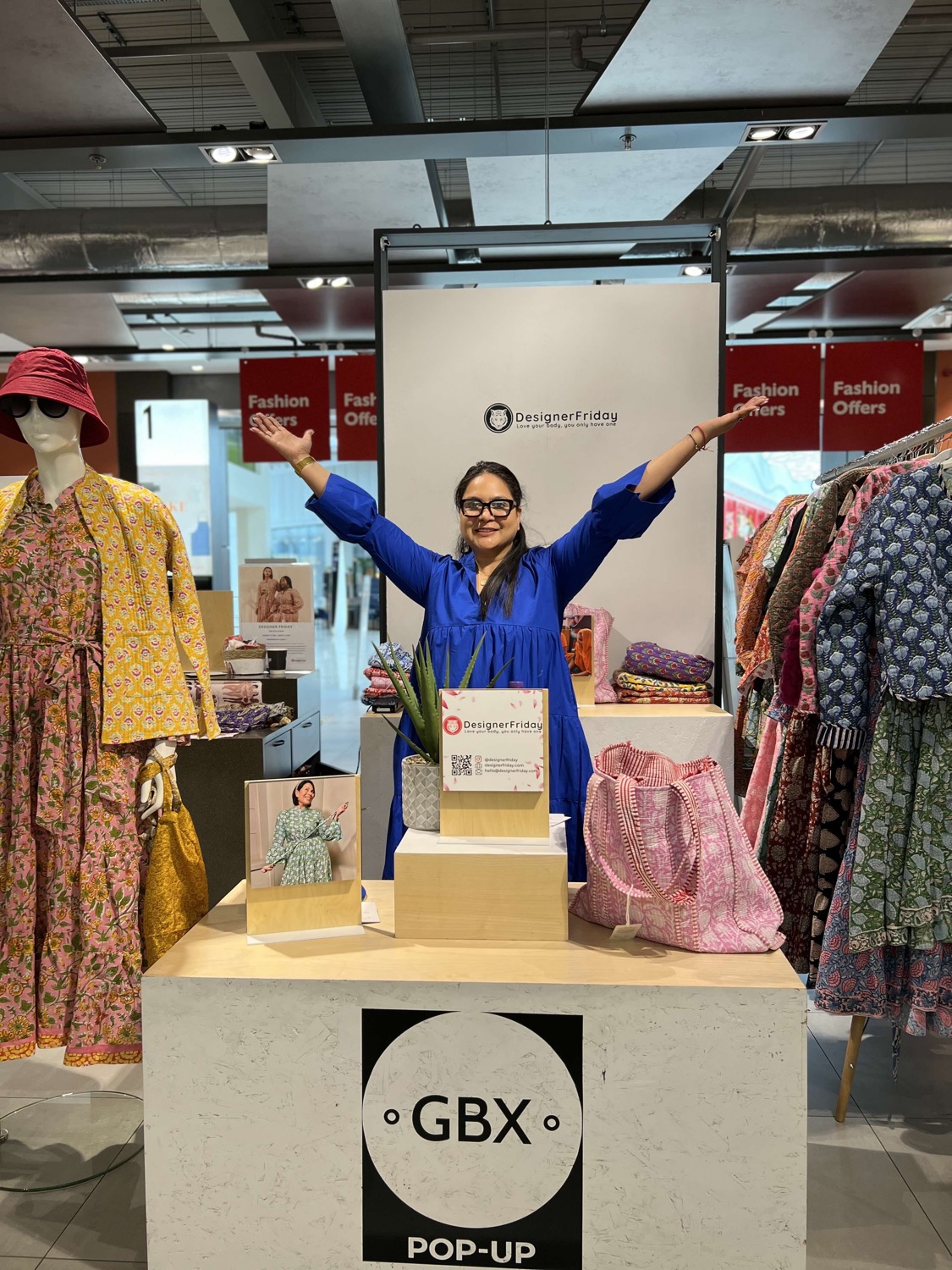
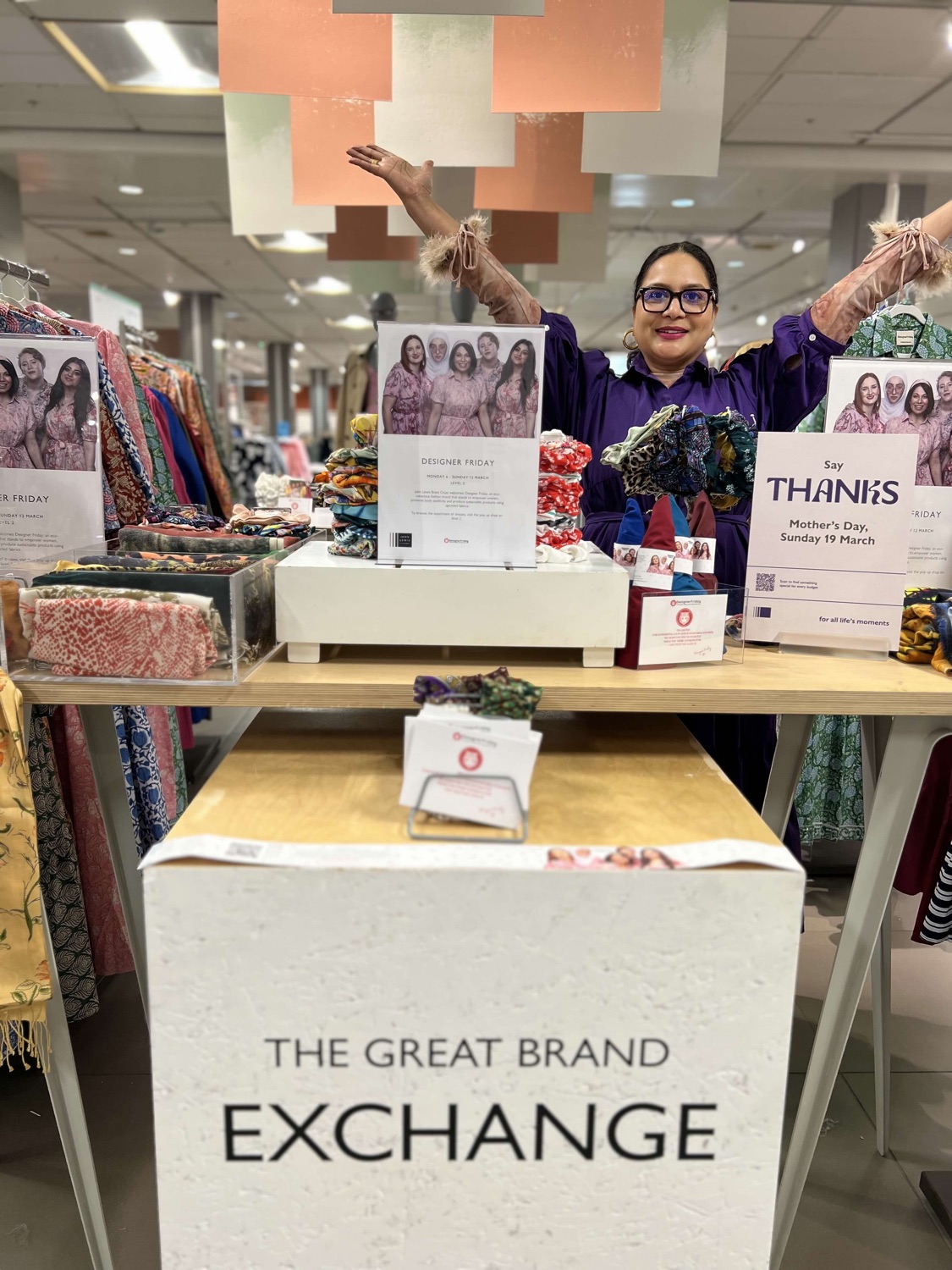
When John Lewis offered us a popup space, it was an exciting moment. I had nearly a decade of trade show experience behind me, so I went in with a clear plan and the experience of hundreds of stands and pitches. But the retail B2C journey is very different to a trade show. The audience is different. The energy is different. The pace is completely different. It was a real learning experience, and I am grateful for every part of it.
Our popup ran Monday to Sunday. Setup started at 7am on the Monday. Store opening hours were 10am to 8pm Monday to Friday, 10am to 7pm on Saturday, and 11.30am to 5pm on Sunday. That time frame shapes everything: the early start on day one, the long mid-week stretches, the slower Sunday at the close. You feel it in your feet by Thursday.
We also tried one other location and found the stores where we belonged.
Footfall alone does not make a popup work; the audience has to match what you stand for. For DesignerFriday, the stores that came alive for us were Brent Cross and White City. The customers there were already aligned with our values, and that connection showed up at the till and in the beautiful conversations we had.
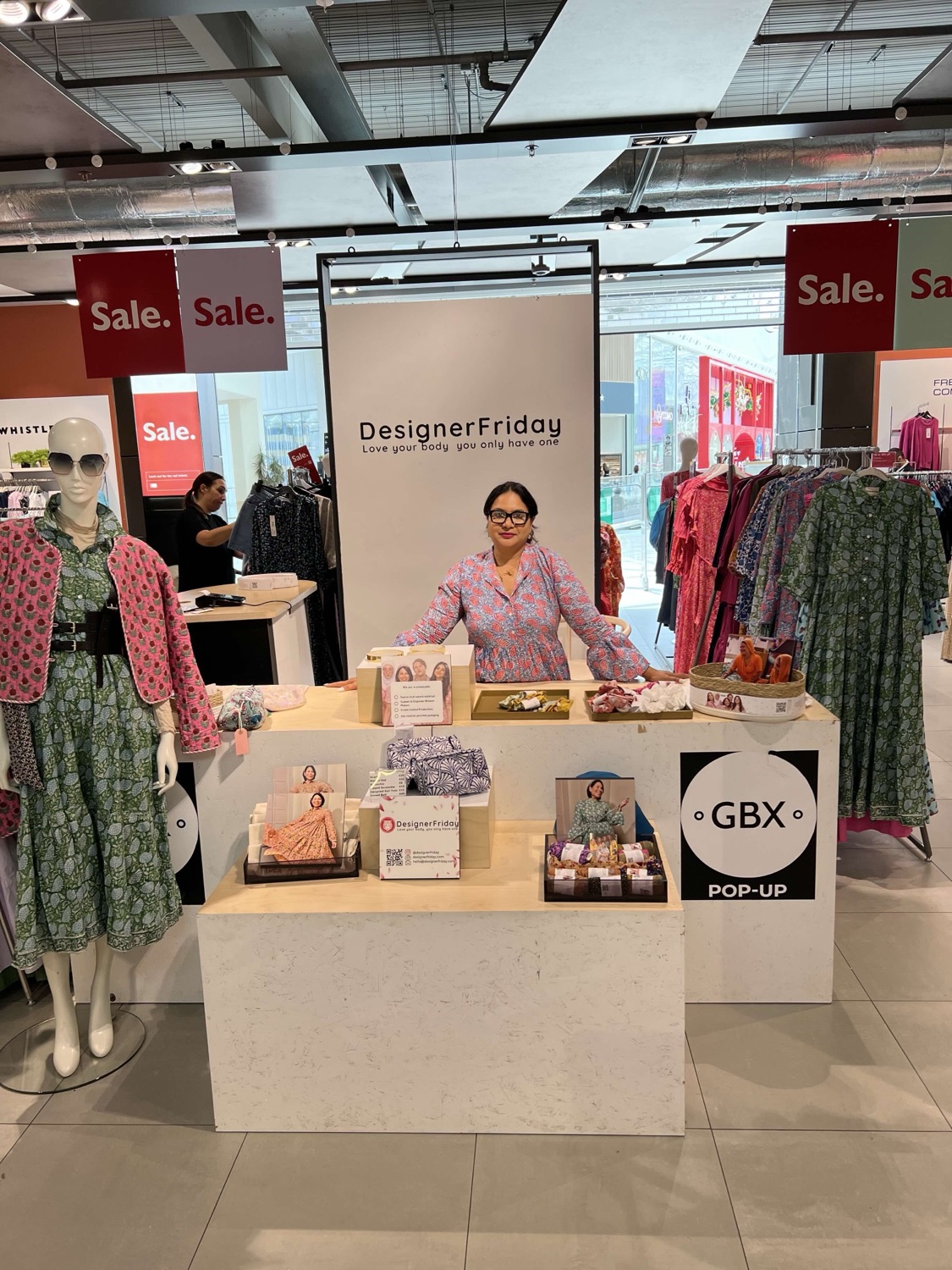
By the Saturday of our first-ever popup, the rails were empty. The hangers were empty. The bags were empty. We had sold out.
This is the playbook I would hand to any founder doing their first popup. There are three free downloadables at the bottom of this post: the exact documents I use when I prep for a new one. Before you grab them, here are the lessons that mattered most.
1. Don’t do it alone
The first popup I did, I did on my own. I would not recommend it.
Get your family, your friends, your sales team. Even three or four hours of help each day will save your back, your voice, and your mood. Plan your snacks and take a hot flask of tea/coffee and cool fizzy drinks and sweets.
It is exhausting either way, with or without help, but with help it is still exhausting but worth it. Without help, it is exhausting and lonely, and by Wednesday you have nothing left to give a customer.
Build in a mid-week break if you can. A morning off. A long lunch. Anywhere away from the shop floor.
2. The pitch is a story, not a sell
I never tried to sell anyone anything.
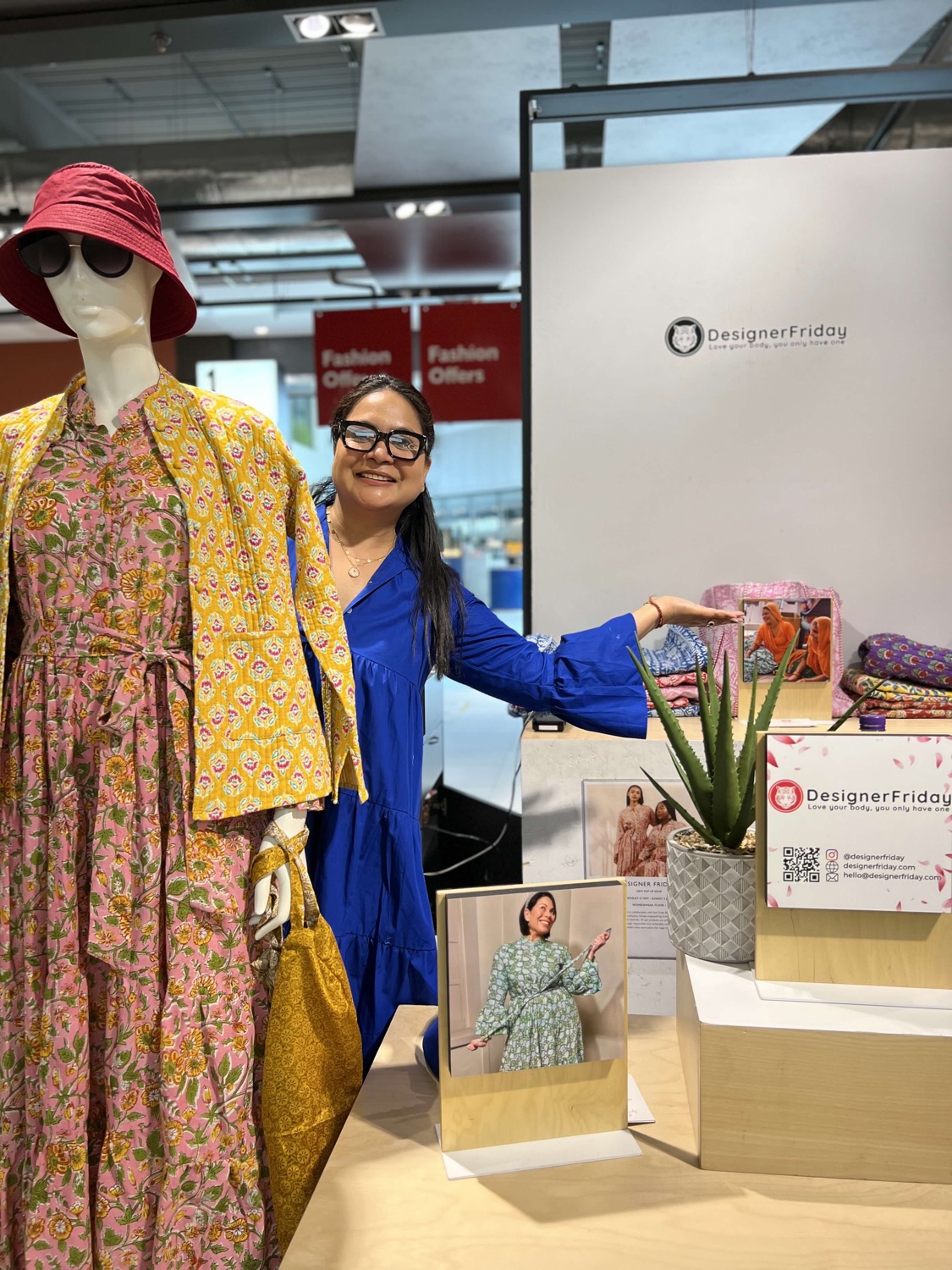
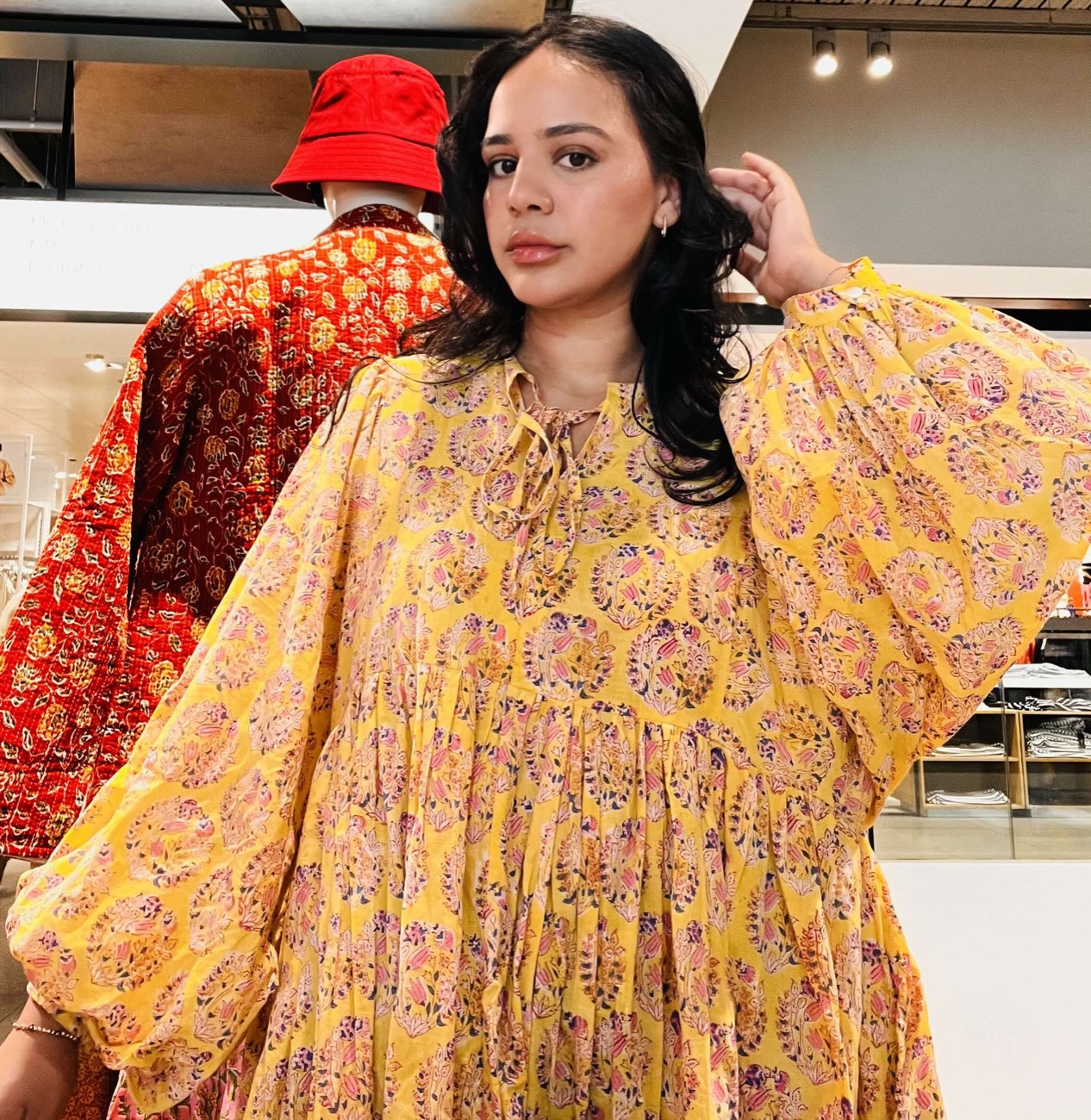
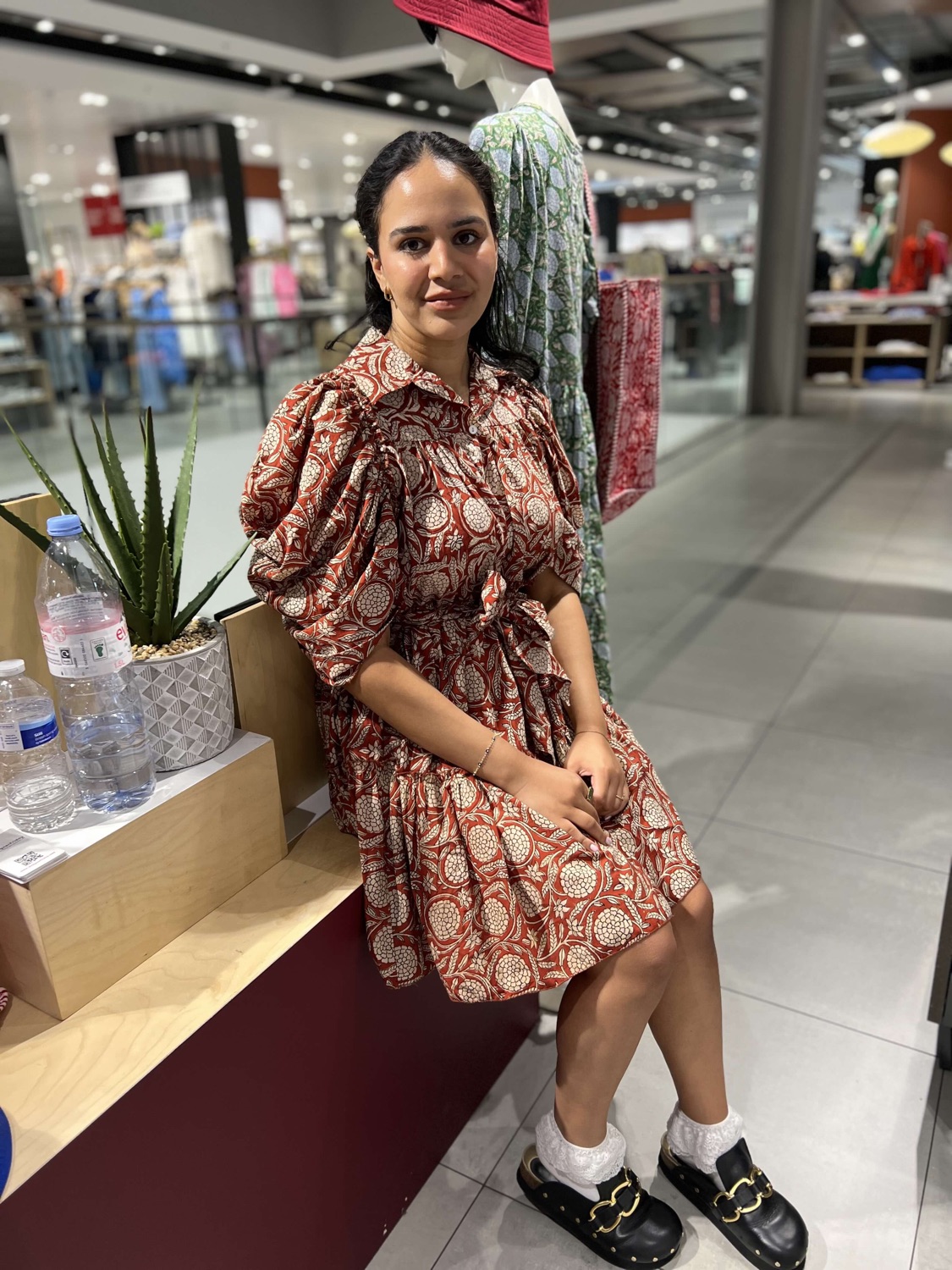
I told them my story. How DesignerFriday started. Where the dresses are made, and by whom. The women in our social enterprise unit. The beautiful A-line shapes, the skin-friendly block prints, the bags, the scrunchies.
People connect with story. Sales follow story. They rarely lead it.
The opening line that worked for me was simple and direct:
“Have you heard of DesignerFriday?”
That is it. You have around three seconds to get someone’s attention as they walk past. There is no time for a warm-up question. Get to the point, with warmth and a smile, and let them say yes or no.
If they say no, that is the moment you have been given. Tell them, in one short sentence, what you are and why it matters. Then offer to show them something.
There is a full pitch framework in the second downloadable, including the language I use at the till to capture an email without it feeling pushy.
3. The operational details
Nobody tells you about the till rolls.
Or that the card machine at John Lewis is card-only, and must be handed back to a partner (JohnLewis staff) every evening to be charged. Or that long product names get truncated at the till (keep them short in the spreadsheet template before they are uploaded to the machine). Or that you need dummy products at the right price points, including the 30% John Lewis commission and 20% VAT (it used to be 22%, sorry future founders). Or the returns sequence you have to learn in the middle of a busy popup when you wish you had six hands. Or that you will be standing 8am to 8pm, and some stores do not even provide a chair.
You cannot sit down on the shop floor. You cannot eat hot food on the shop floor. Phones on silent, water bottles out of sight, personal belongings put away. These rules are not optional at a premium retailer.
The first downloadable is everything I now pack, prepare, and brief my team on before we set foot in a store. It is unglamorous stuff, everything you’ll do behind the scenes to look the part. It is also exactly the kind of thing that saves a popup. Find all the tips you need in there.
4. Your customers find you if they know where and how
A popup is not the week of the popup. It is the month before, the week of, and the fortnight after.
Your customers will find you if they know where and how to find you. That sounds obvious, and it is the part most founders forget when they are focused on stock and pricing and stand design.
What that looks like in practice:
Four weeks before: announce the popup everywhere. Plan a giveaway. Contact the venue’s PR team. Learn the hashtags to add to your post.
Three weeks before: introduce the makers. Tease the in-person exclusives.
Two weeks before: dedicated email to your list. A VIP preview slot for your top subscribers.
One week before: daily countdown stories. Brief your sales team. Pin the venue details to your profile.
During the week: a daily bts of morning setup, customer stories, and end-of-day “best seller” posts that tag the product on your website so people can buy online too.
The week after: thank everyone publicly. Follow-up email. Review with your team. Tag the staff member who most helped you or better yet, give them a present from your products along with a personalised note.
The third downloadable is the full 30-day calendar. What to post, when to post it, and why each post matters.
5. The energy you bring is the product
You can have the best stock, the best pricing, the most elegant stand, and if you do not have the energy to look someone in the eye and smile, none of it works. The energy you bring is what the customer connects to.
Not your product. Not your packaging. YOU.
Three things help:
Get help. Do not underestimate three or four hours of support each day.
Build in a mid-week break.
Start every morning with music or a podcast that lifts you, so you arrive already in your happy zone. The first customer of the day will know.
One last thing. Do not book two popups at the same time. I did, once. I learned not to. When something goes wrong, and something always does, you need to be in one place.
The Downloadables
Three free guides. The exact documents I use when I prep for a new popup. Built from our weeks at John Lewis and refined since.
The Popup Prep List. The countdown, the kit list, the operational checklist, the venue rules.
The Popup Marketing Pitch. The opening line, the connection framework, the full pitch, the till conversation.
Your 30-Day Popup Marketing Calendar. What to post, when to post it, and the daily rhythm during the popup itself.
Drop your email in the form below and all three will land in your inbox within five minutes.
Bhavna Rishi is the founder of DesignerFriday, a sustainable brand making dresses and accessories from upcycled fabric, sewn by women in a social enterprise unit in London. She also mentors founders through Build the Dream Brand.