A decade with the V&A
I still remember walking into the V&A’s buying offices for the first time: the stained glass windows, the beautiful route up to the office, and the feeling of real pride at being there as the production partner for an institution like that. A decade on, I know exactly the level of expertise the V&A’s shops need from us, so that every piece is true to the artwork and the exhibition it sits alongside.
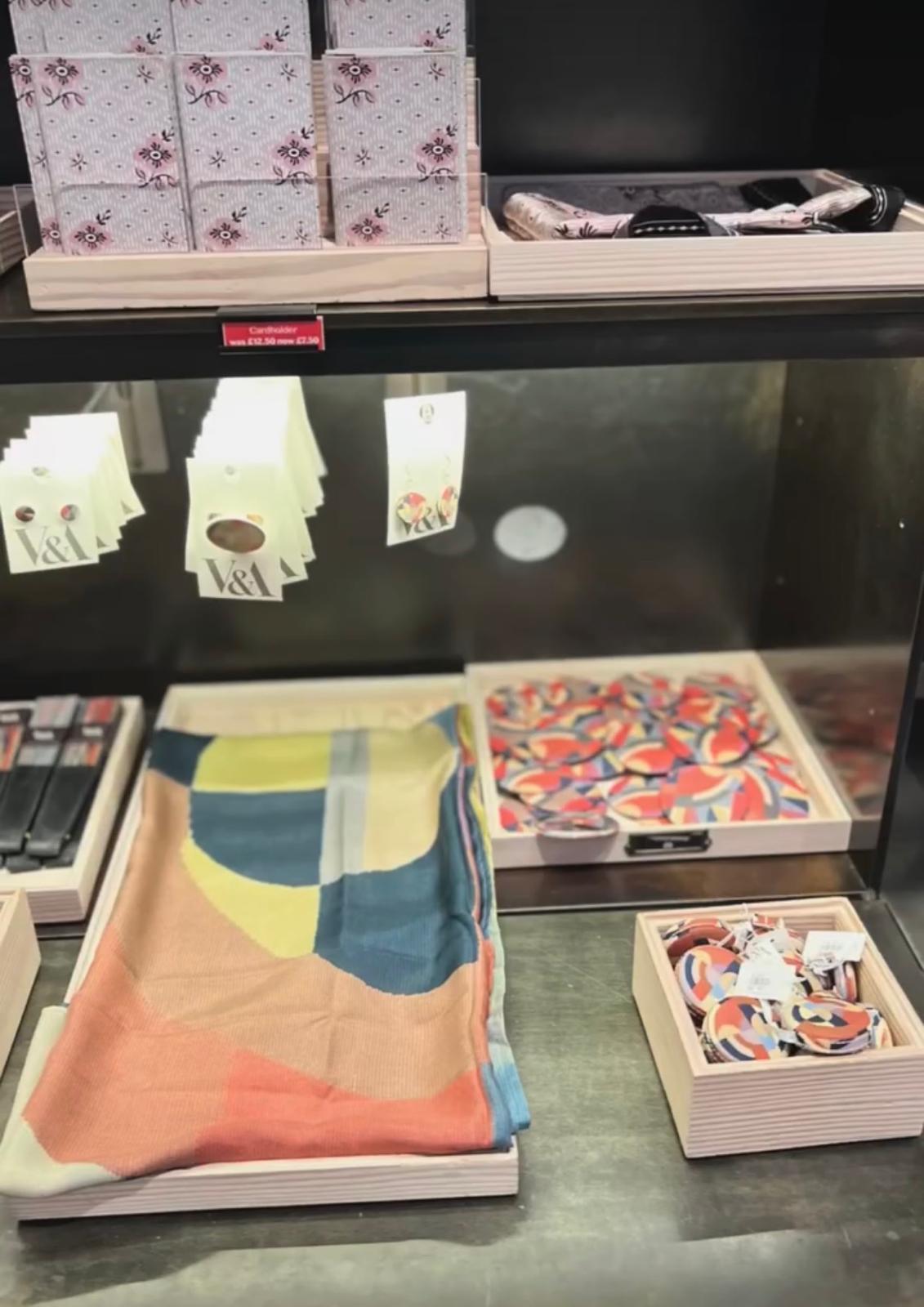
Every scarf produced for the V&A started as a brief, an artwork, a colour reference, or an exhibition theme, and ended as a finished product on the gift shop floor, with approval from the museum’s buying and licensing teams at every stage.
That process, and the relationships it requires, is what ten years of continuous work actually means. Here are a few of my own insights from working with heritage brands like the V&A, the British Museum and many more.
Story is everything
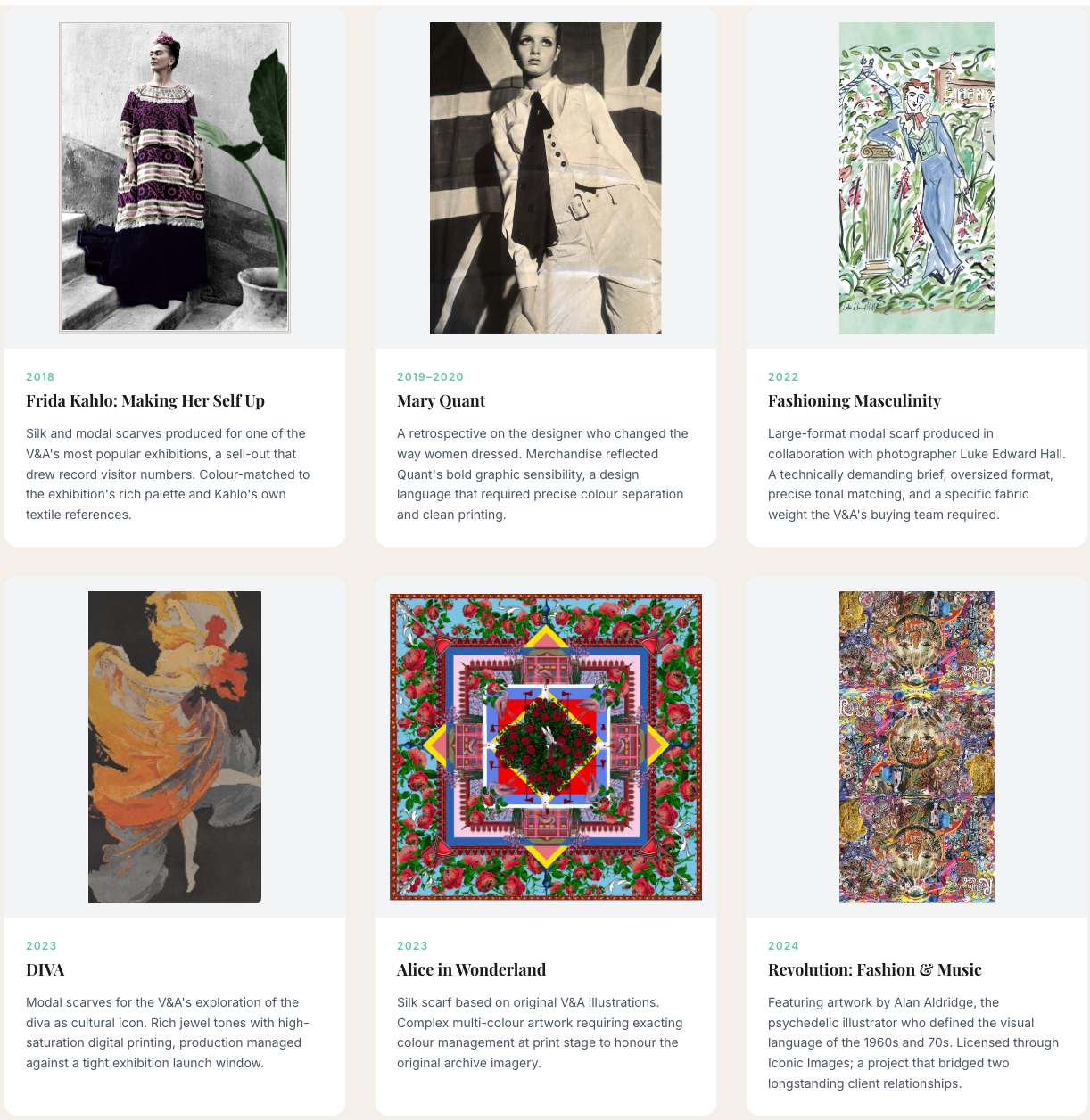
Every product starts with a story, and the story is what sells it. Each piece carries provenance and a connection to the past, which makes the story behind it as important as the scarf itself. The Frida Kahlo scarf we produced celebrated her raw, intensely personal self-portraits and her status as a cultural and feminist icon. The artwork carried her story, and the scarf carried the artwork. Every item has to stay true to that artwork, because it is one part of a whole exhibition that has to come together cohesively.
Every product starts with a story, and the story is what sells it. The artwork carried her story, and the scarf carried the artwork.
Building a legacy
Buyers think in the long term. The merchandise exists to extend the exhibition and honour its theme, so every piece has to feel like part of one coherent collection that celebrates its moment in history, not a set of unrelated products.
Buyer alignment
None of this works without buyers who are aligned with you, who want to recreate a piece of history as much as you do. I have been lucky to work with lovely buyers who feel like an extension of my own team, all of us pulling in the same direction to bring the dream product to life, across scarves, t-shirts, jackets, tote bags and printed clothing.
Meeting the deadline
I work backwards from the delivery date. Fabric procurement, fabric prep, colour matching, printing, stitching, packing and delivery all have to be timed precisely, because the launch is usually tied to a public opening that cannot move.
Production quality
The product has to meet a quality threshold that reflects the heritage brand. Fabric weight, finish, edge work, all of it matters, and I have teams on the ground checking every piece.
Licensing
When the artwork belongs to someone else, the process is formal. Agreements are signed, and every colour, hem style and text element, down to the credit line and signature, is approved before it goes to print. Our printing partners sign these agreements too, so the artwork is protected at every step.
Retail
The product has to sell. Pricing, presentation and replenishment are the commercial realities that sit alongside the curatorial ones.
The foundation everything is built on
Ten years of managing every part of this, working with printing partners around the world for one of the world’s most recognised cultural institutions, is the foundation everything else is built on. It is also the work I love most: the place where heritage storytelling meets beautifully made printed merchandise.
Let’s talk
Whether you are a museum, an archive, an estate or an artist, let’s talk about turning your artworks into great pieces of merchandise. Ready to book a call?