Why I am writing this
I have been exhibiting at UK trade shows for fifteen years. Top Drawer at Olympia. Pulse. Pure. Autumn Fair at the NEC in Birmingham. Enough shows, enough stands, enough eight-hour days on my feet in comfortable loafers, to have made most of the mistakes and learned a few things worth passing on.
Recently I was advising someone about to do a trade show and it occurred to me that I should share my knowledge of over 15 years of doing the shows- the good, bad and the learnings with the rest of the founders about to do the same.
If you are considering a trade show as part of your brand-building infrastructure, or you have signed up for your first one and the panic is setting in, this piece is for you.
The story that convinced me trade shows work
My first ever show was Top Drawer. I was nervous. I did not know how to design a stand. I had no clue what to expect. I displayed my scarves the best way I could on the wall. I did not have a custom stand; I did not have branded backdrops; I did not have a slick digital line sheet. What I had was the product, arranged as clearly as I could arrange it.
Two women walked up to my stand on the first morning. They were from Surrey, they did not even have a boutique, and they had never heard of me before that moment. What they had was a private customer list for their events.
They placed an order for £4,000.
That order taught me the single most important thing about trade shows: the product has to speak for itself before people walk in. Your story and your product story matter even more. The stand design matters, but it matters second. What draws a buyer across the aisle is a product that stops them. What closes the sale is how you talk about it once they are standing there.
I have thought about that £4,000 order at every show since. It reminds me that the work is in the product, and the show is where the product finds its people.
Two women walked up to my stand on the first morning. They didn’t know Bhavna.com existed prior to meeting me. They placed an order for £4,000. The product has to speak for itself before people walk in.
Which UK trade shows are worth doing
There are more shows than most first-time exhibitors realise, and choosing the wrong one is expensive. A quick overview of the main UK circuit for lifestyle, gift, and fashion brands:
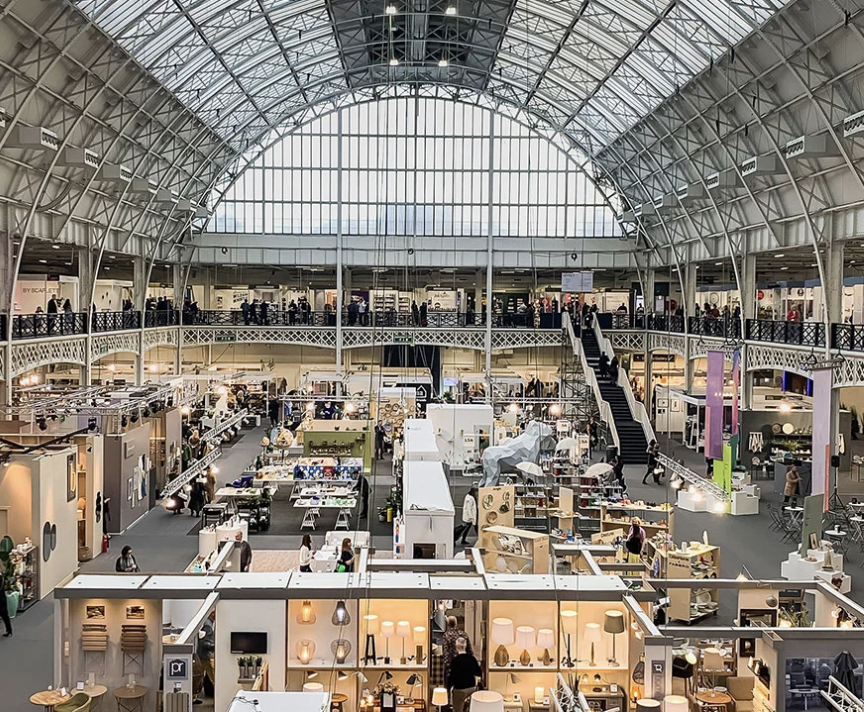
Top Drawer happens twice a year at Olympia London, January and September. It is the UK’s leading design-led lifestyle show, with around 550 exhibitors and roughly 10,000 buyers per edition. Curated across sectors including Home, Gift, Fashion, Craft, Play, Greetings & Stationery, LUXE, and the Spotted section for first-time exhibitors. If you are a design-led brand with a considered aesthetic, Top Drawer is usually the right first show.
Autumn Fair and Spring Fair happen at the NEC in Birmingham. These are much bigger shows in scale, more mass-market, more volume-driven, more retailers looking for lower price points. Suits brands with strong wholesale margins and scalable production. Not the natural home for premium independent brands, but worth attending as a visitor at least once to understand the wider market.
Pulse is now part of Top Drawer’s ecosystem, positioned as a section for younger, more contemporary brands. If you are a modern lifestyle brand and Top Drawer’s main hall feels a little too traditional, Pulse is the entry point.
Pure London was historically the leading UK fashion trade show at Olympia. It has gone through significant changes over the last few years including some cancellations and rebranding, so check its current status carefully before committing. Fashion-specific shows in the UK are thinner on the ground than they used to be.
Home & Gift Harrogate happens in July. Smaller than the NEC shows, with a strong regional buyer base. Worth considering if you have a home and gift range as well as fashion.
London Stationery Show at the Business Design Centre for stationery-adjacent brands.
There are also more niche shows worth researching depending on your category: Scoop for contemporary women’s fashion, Moda at the NEC for fashion wholesale, and international shows like Maison & Objet in Paris and NY Now in New York for brands ready to export.
My honest recommendation for a first-time exhibitor from a design-led independent brand is to visit Top Drawer as a buyer first, walk the show, understand the atmosphere, then commit to the following January or September edition. Do not sign up for the NEC or an international show until you have done at least one round of a smaller, more curated show first. And that you have visited these shows at least once to see if they align with your brand and align with your products.
The stand: what to design and what to buy
Your stand is the physical answer to the question every buyer walks the aisle asking: what does this brand do, who is it for, and why should I stop?
Sit down before you spend any money and answer that question in three lines. If you cannot, the stand will not do it for you. If you can, the stand’s job is to make those three lines visible from twenty feet away.
The practical checklist that I actually use, worked out over fifteen years of what I forgot the first time:
The build
- Rails, hooks, shelves, and how you are going to display your product line clearly
- A custom-made or hired display board suited to your product. I eventually had a custom foam-board made for my silk scarves that let me pin colour across the full range and made the stand recognisable across the aisle. Worth the investment after the first show; skip it for the first show.
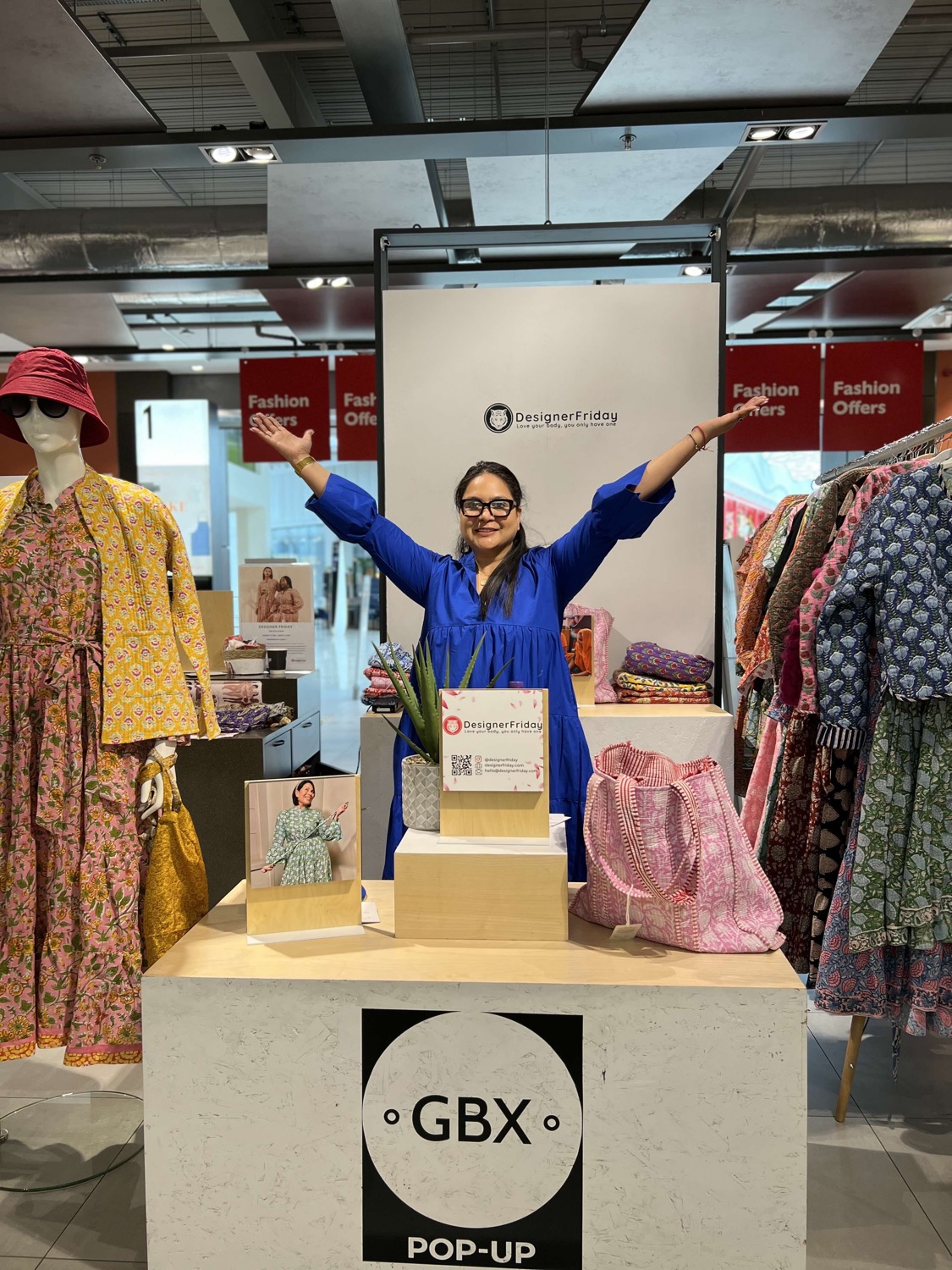
- A mirror. Buyers who are considering a fashion product often want to hold it up against themselves. Not having a mirror, costs orders.
- Good lighting if the venue’s lighting is flat. Most venues are lit for volume, not for product. You can also order these from the show organisers.
- A small side table or ledge for a laptop or tablet, water bottles, business cards, and the digital line sheet.
The tools that get forgotten
- Hammer, screwdriver, scissors, tape (masking, gaffer, and double-sided), zip ties, blu-tack, safety pins
- Backup phone charger and a plug extension
- Notebook and a stack of business cards
- Protein bars and snacky food
- A small first aid kit (blister plasters, painkillers, throat sweets, trust me)
- Comfortable shoes to change into, and a spare pair
- Cash for coffee, food, and the emergency situations that always come up
The stock and logistics
- Physical samples of every product in every colour, plus one or two spares in case of damage
- Product labels showing style number, price, and any story detail worth knowing
- Marketing images for the walls, but do not paper the stand with them. Product is the hero, images are supporting.
- Printed line sheets or, better, a digital line sheet on a tablet or a well-designed order form that lets you capture orders during buyer conversations
- A giveaway complimentary sweet or a product with a card.
Minimum order quantities, lead times, and stock questions
Before the show, you need a clear internal answer to every one of these:
- What is your minimum order quantity per style, per colour?
- What is your lead time on production if a buyer orders now?
- Do you have stock ready to ship immediately, or is this all made-to-order?
- What is your delivery cost and terms?
- What are your wholesale prices and your recommended retail prices?
- What is your payment structure: deposit, balance on delivery, net-30?
Most first-time exhibitors do not have clean answers to these on day one. Have them ready before the doors open.
Buyers who are considering a fashion product often want to hold it up against themselves. Not having a mirror, costs orders.
Where to stand, and what to say
This is the part where most exhibitors get it wrong.
Do not stand in the middle of your stand. Do not stand behind your product with your arms folded. Do not sit down for the entire show either; the worst-selling stands are always the ones where the exhibitor is scrolling their phone.
Stand to the side. Leave the front of the stand open and welcoming. Have some of your product forward, so it draws people in, and hold the rest at the back to create depth and a reason for buyers to step inside.
When a buyer engages, never ask Can I help you? The automatic answer is always no. Instead, ask Have you heard of our brand? It opens a real conversation. If they say no, you have thirty seconds to tell her your story. Not your marketing pitch, your story. Where the product comes from, who makes it, why it is different, what problem it solves for her buyer.
Thirty seconds. Practise it. Say it out loud before you get to the show. Say it in front of a mirror. Say it to a friend and ask what they would remember afterwards. If you cannot get it into thirty seconds, you do not yet know what your brand is.
The buyers who become long-term stockists are almost always the ones who felt they had a real conversation with a real person. The product mattered. The story mattered more. Trade shows have a relationship function no online platform, no wholesale platform, no email campaign can replicate. That is the actual value.
The tired-exhibitor mistake
If the show is five days long, take the middle day off. Or take alternating days off if you can staff the stand with a helper. If you cannot afford to take a day off, take two hours off in the middle of every day.
Because the truth about trade shows that nobody mentions:
tired exhibitors make really inefficient salespeople.
Selling on a stand is not just standing there. It is being energetic, being curious, being warm, holding attention, remembering names, listening properly, and doing all of that while smiling and standing on your feet for eight hours. It is exhausting.
By day three of a five-day show, the average unrested exhibitor is running on adrenaline and coffee. Their pitch gets flatter. Their eye contact softens. They miss the small signals that tell them a buyer is serious. And they burn through the goodwill they built on days one and two.
The way to avoid this is discipline: sleep properly (not networking dinners every night), eat properly, hydrate constantly, and take breaks even when you feel guilty about it. A rested exhibitor on day four sells more than a wired one who has not stopped moving.
What to wear helps too. Trade show halls get hot. Comfortable cotton or linen clothing that breathes is worth more than something fashion-forward that will make you miserable by lunchtime. Loose enough to move in. Neutral enough not to compete with your product. Comfortable loafers, not sandals or trainers. You will thank yourself on day three.
Tired exhibitors make really inefficient salespeople. The way to avoid this is discipline: sleep properly, eat properly, hydrate constantly, and take breaks even when you feel guilty about it.
Before the show: the work that actually determines your ROI
Research consistently shows that around 50 to 70% of trade show success is driven by what happens in the six to twelve weeks before the show, not by what happens on the floor. The exhibitors who leave with the biggest orders are almost always the ones who did the most before turning up.
The pre-show work I would not skip:
Build a target buyer list. Research the boutiques, department stores, and independent retailers in the region hosting the show. Contact them at least four weeks out. Send a short, personal email, not a mass mailer, letting them know you will be exhibiting, what your stand number is, and why you think their store would be a fit for your brand. Offer a complimentary sample or a small welcome gift if they visit. This is how you turn a random show into an appointment book.
Prepare marketing collateral properly. A well-designed line sheet with clean product photography, pricing, and MOQs. A short brand story printed on quality paper. Business cards with a QR code. A one-page press-ready sheet with your brand credentials and press coverage if you have it.
Set your metrics before the show, not after. Decide what success looks like. Number of new leads. Number of orders placed. Value of orders. Number of long-term-potential conversations. Number of press contacts made. Write these down. Track them daily during the show. You cannot measure what you have not defined.
Cost your show honestly before you commit. Stand rental, stand build or hire, travel, accommodation, materials, samples, food, contingency. The number will surprise you. Divide the total by your realistic conversion expectation, and you will know the average order value you need to hit to break even on the show alone. Most first-time exhibitors do not do this maths until after they have already committed, at which point it is too late.
The industry rule of thumb: exhibitors who plan properly deliver ROI (return on investment) in the range of 100% or better on their trade show spend. Exhibitors who wing it typically deliver negative ROI on the immediate show revenue and hope the long-term brand awareness makes up the difference. Sometimes it does. More often it does not.
The opportunities that come from being there
Here is what nobody tells you about trade shows: the biggest wins usually come from something other than the immediate stand orders.
Over fifteen years of exhibiting, I have been approached by:
- Other exhibitors at the same show who wanted me to produce their products, because they saw the quality and range I was producing and recognised the production expertise. These have led to some of my longest and most valuable production relationships.
- Bigger retail buyers who wanted me to white-label products for their private range. Different economics, different terms, but genuinely commercial and often more stable than seasonal wholesale.
- Press and journalists doing show write-ups who included my brand in coverage that then reached far beyond the show itself.
- Long-term stockists who did not order at the show but came back three, six, or twelve months later once their buying budget aligned.
The immediate orders on the stand are one revenue stream. The relationships, the production opportunities, the white-label conversations, the press mentions, those are often worth more over time than any single show’s order book.
A buyer you meet in February may not place an order until her intake in July. A buyer in September may not have the budget until the January new-year reset. A brand that treats trade shows as one-off sales events misses this. A brand that treats them as long-term relationship infrastructure gets the compounding return.
This is why the follow-up is more important than the show.
The immediate orders on the stand are one revenue stream. The relationships, the production opportunities, the white-label conversations, the press mentions, those are often worth more over time than any single show’s order book.
After the show: the follow-up You MUST do
Research shows that leads contacted within two hours of a badge scan have a 400% higher conversion rate than leads contacted 24 hours later. Yet around 40% of exhibitors wait three to five days before following up, and many wait longer. This is the single biggest ROI leak in the trade show model.
The follow-up discipline I keep to:
Every lead gets a personalised email within 48 hours. Not a mass mailer. A specific email that references the actual conversation you had. If they mentioned they were expanding her home and gift range, mention it back. If they said they were heading on holiday, ask how it was. If they talked about a specific product, follow up on that product specifically. The personalisation is not a nicety; it is the reason people reply.
Tier your leads on the same day the show closes. Immediate need, near-term need, longer-term nurture. Different tiers get different follow-ups. Immediate needs get a phone call within 24 hours if possible. Near-term needs get the personalised email plus a second touchpoint within two weeks. Longer-term nurture goes on a proper CRM list with quarterly follow-ups.
Pick up the phone. In an industry that has forgotten how to do this, actually calling a buyer three days after the show is one of the most memorable things you can do. Give her a few days to digest her show notes, then ring. It converts.
Track the 12-month conversion, not just the immediate orders. Some of my best long-term relationships started with a business card exchange at a show and did not become orders for six or eight months. If you close your books at four weeks post-show, you will underestimate your ROI significantly. Track everything for a full year and reassess.
What to bring back that is not an order
Even shows that do not deliver strong immediate orders often deliver something more valuable if you are paying attention: experience.
Walk the show yourself when you can step away from your stand. Look at what your competitors are doing. Their price points, their product ranges, their stand designs, their stories. Note what is working and what is not.
Attend the seminars. Most trade shows now run parallel programmes of talks on trends, retail strategy, sustainability, and market outlook. These are often included in your exhibitor fee. Go. Make notes. Connect with the speakers afterwards.
Talk to other exhibitors. Especially the ones in your general category. You are not competitors in the way you might think; you are all trying to grow the same market. Some of my most valuable industry friendships started at other people’s stands during quiet moments in the show.
The first year exhibiting at any new show is as much market research as sales. Approach it that way, and the pressure comes off. Every conversation is useful, whether or not it converts into an order.
What I would do differently on my first show, knowing what I know now
Ten things I would tell myself before that first Top Drawer, if I could:
- Invest in the pre-show buyer list. Do not rely on walk-ups. The walk-ups will happen anyway; the appointments are what turn a good show into a great one.
- Have MOQs, lead times, product pricing, and payment terms written down before the doors open. Do not improvise.
- Spend more on the stand than you think you need to, but not on ostentation. Spend it on lighting, on a mirror, on clear product display.
- Prepare your thirty-second brand story and say it out loud a hundred times.
- Bring more product than you think you need. Buyers want to see options.
- Take alternating days off if you can. Rest is a competitive advantage.
- Follow up within 48 hours. Not a week. Not two weeks. 48 hours.
- Track everything for twelve months, not one.
- Do not judge the show on immediate orders alone. Judge it on the relationships you built and can compound.
- Come back to the same show for at least two editions before you decide whether it works. The first year is learning. The second year is where the compounding starts.
The honest answer to “is a trade show worth it?”
For most independent fashion and lifestyle brands, yes, but only if you approach it as brand-building infrastructure, not as a one-off sales event.
A single Top Drawer stand at Olympia will cost you in the region of £3,000 to £6,000 depending on size, plus stand build, travel, accommodation, materials, and time. To break even on that immediately, you need to write meaningful order value at the show. Some brands do, from day one. Many do not.
But the brands that treat the show as a two-year investment, first year to establish, second year to compound, tend to find that the ROI arrives properly in year two. The relationships you built in January mature by the following January. The buyer who did not order in September comes back the following September with a budget. The white-label enquiry from an exhibitor down the aisle becomes a six-figure production relationship two years later.
Trade shows work when they are part of a properly resourced brand strategy. They do not work as desperate one-shot sales pitches. If you have the capital to invest in doing them properly, and the patience to see the returns come through, they remain one of the highest-leverage brand-building channels in wholesale fashion.
A buyer who touches your product, hears your story from you personally, and remembers the conversation is worth more than any digital impression will ever deliver.
Where to go from here
If you are considering your first trade show, three practical starting points:
Visit a show as a buyer before you commit to exhibiting. Top Drawer’s January or September edition is the easiest way in for design-led brands. You will learn more in one day walking the show than in three months reading about it.
And if you are already committed to a show and the panic is setting in, use the pre-show checklist above. Six to twelve weeks of proper preparation is what separates the exhibitors who write orders from the ones who spend five days wondering why nobody stopped at their stand.
The £4,000 order from two women who walked up on the first day to my first ever Top Drawer stand is still, fifteen years on, one of the most instructive things that has ever happened to me in this industry. It taught me that the product carries the brand, the story closes the sale, and the follow-up compounds the value. Everything else is logistics.